
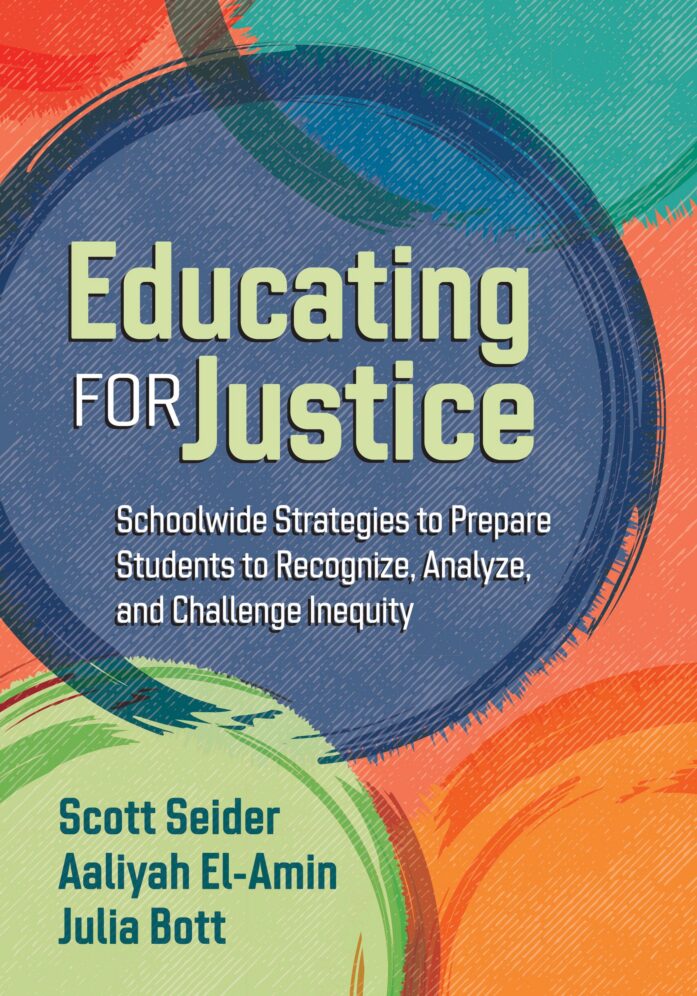
The main ideas of the book:
- Schools should take an active role in preparing the next generation to build a better world.
- School leaders are uniquely positioned to bring together the power of students, families, and educators to move society in the
direction of equity and justice.
Why I chose this book:
We’re not just preparing students for the future — we’re preparing them to shape it. That’s why Educating for Justice stood out. It challenges us to think beyond academics and ask: Are we helping students recognise unfairness, question it, and do something about it?
What I like most is that it’s practical. This isn’t just big ideas — it’s a clear path to making justice a schoolwide priority (not just something a few passionate teachers take on). With four simple principles, the authors show how to turn good intentions into real, everyday practice:
- Build adult capacity
- Center justice in curriculum
- Foster partnerships
- Engage students in action
If you’ve been thinking, “We should be doing more here…” — this gives you a way in.