BookBit by Jenn David Lang

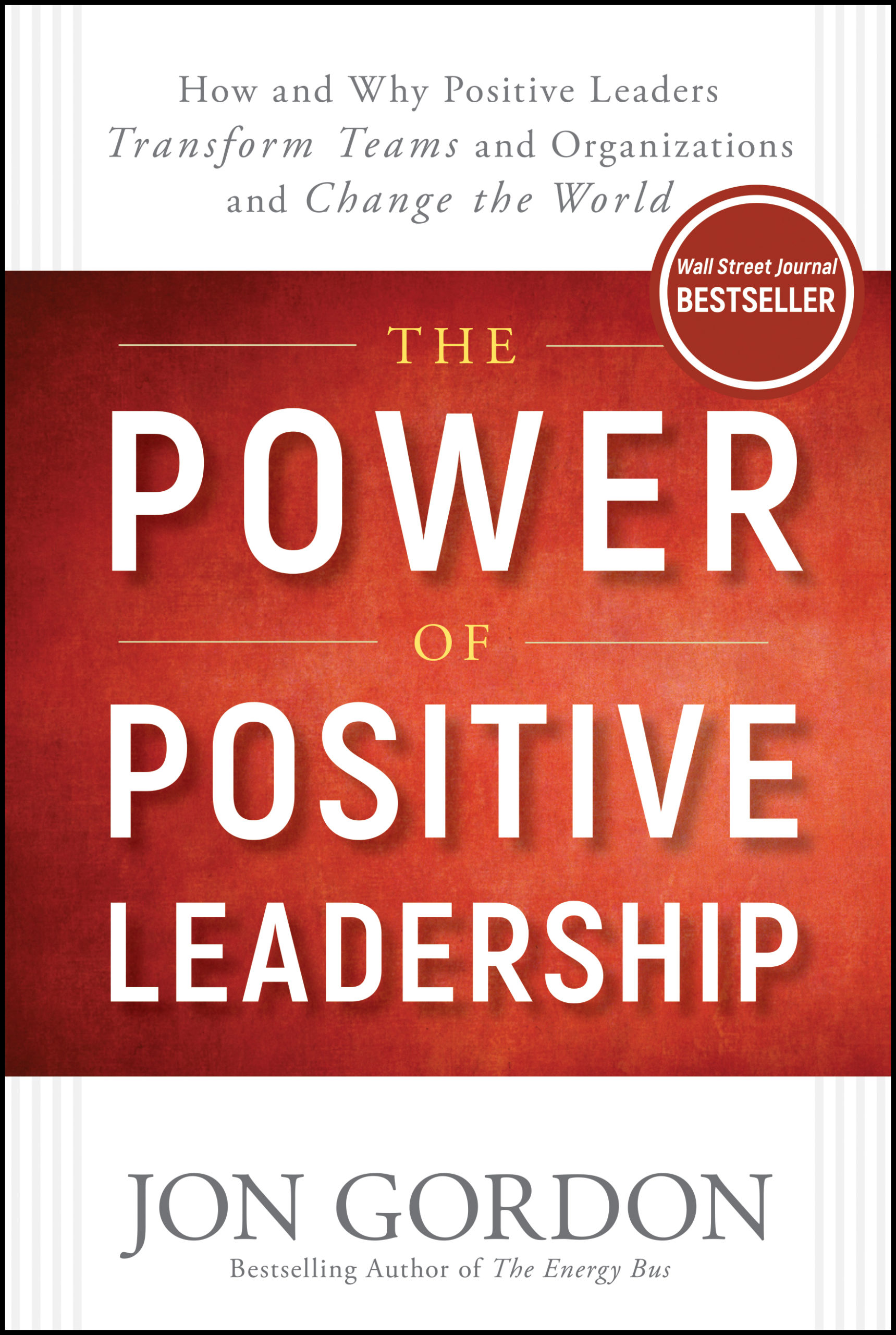
The Power of Positive Leadership:
How and Why Positive Leaders Transform Teams and Organizations and Change the World
By Jon Gordon (Wiley, 2017)
What are the main ideas?
- Positive leaders have a tremendous impact on their organizations, teams, relationships, and themselves!
- This book provides a framework with simple and practical ideas to help you become a positive leader.
What are the main ideas?
- Positive leaders have a tremendous impact on their organizations, teams, relationships, and themselves!
- This book provides a framework with simple and practical ideas to help you become a positive leader.
Why would a school leader want to read this?
“We are positive, not because life is easy. We are positive because life can be hard.” At no other time in the past 100 years have we needed positive leaders as much as we do now. Positive leaders have a tremendous impact on everyone around them.
Jon Gordon is a firm believer that positivity isn’t something you need to be born with. He learned this the hard way. Gordon wasn’t a naturally positive person and his wife was about to leave him. He decided to become positive. Yes, positivity is something you can cultivate.
Gordon outlines nine capabilities of positive leaders and provides concrete action steps for how you can embody each one.
Then I highlight nine actions you can take during this current crisis to cultivate your own positive leadership style.
Several months into this crisis and we are seeing our school community confront loss and flat out quarantine fatigue. Now is our opportunity to rise up. We can lose energy and succumb to the negativity or we can choose to be positive and solution-oriented. If you want to learn how to choose the latter, I’d recommend sitting down with this book (it’s just under 200 pages) because it oozes with positivity. You will emerge inspired to take on this Coronavirus behemoth and be the positive leader your school needs you to be.
This is the perfect time to become a more positive leader. This is your opportunity. Now.
The 9 Capabilities of Positive Leaders
1. Positive leaders drive positive cultures.
Of all topics, Gordon starts the book with culture. Why? “Culture is not just one thing. It’s everything.” Every positive leader knows how to build a positive culture. The first step is to answer two questions: 1) What do we stand for? 2) What do we want to be known for? One leader wanted a culture centered around teamwork and came up with the slogan, “None of us is as smart as all of us.” But you can’t just talk about the culture you want to build. You need to live it. Once you decide that a positive culture is a priority, and you know what you stand for, this must come through in every interaction, every meeting, every communication that you have as a leader. You don’t have to be an extrovert, but research shows that a leader’s emotions are contagious – if you exude positivity and energy, this will help you build the positive culture any successful organization needs.
Pandemic Application from The Main Idea to Build Culture
The culture of your school post COVID will depend on how well you build connection during the crisis. Can you come up with a slogan to help send a clear message and build a positive culture during this crisis? “Emerging stronger, safer, and even more caring than before.” This is the perfect time to cultivate your culture when there is less of an emphasis on test scores and results. Gordon says leaders often neglect culture because “it’s a lot easier to measure the fruit of the tree than it is to cultivate the fruit.” Invest in the root during this crisis; don’t let your tree die.
2. Positive leaders create and share a positive vision.
It’s powerful when people know they are contributing to a larger vision. Positive leaders know how to forecast an inspiring future. Leaders need to paint a bright future, rally staff around that vision, and encourage people to take the next steps toward it. Even if the vision isn’t perfect, you can inspire people to move forward if you can help them envision a path. Out of all of the people who run marathons, extremely few drop out in the last mile even though that’s when they should be feeling the most tired. Why?
Because that’s when they can see the finish line. That’s the power of a positive vision.
Pandemic Application from The Main Idea to Build Vision
Gordon seems to have predicted what people need from leaders during this crisis. “We don’t have a perfect set of plans because the world is always changing, but we do have a North Star that will guide us. We don’t have a perfect road map, but we have a path forward and we have each other. Let’s keep our eyes on the North Star and keep moving forward.” The best thing you can do as a leader during this crisis is not wait for a perfect plan. Instead, imagine a compelling path forward, share it in every communication you have, and remind people that you have each other to move forward during this crisis. Two things to do now: take your telescope and outline a North Star – your vision for moving forward (perhaps for opening school again). Next, use your microscope to give your school community one or two small actions they can do this week to make progress toward this North Star.
3. Positive leaders lead with optimism, positivity, and belief.
Optimism, positivity, and belief are the three keys that drive positive leadership. If you want to be positive, you have to really believe that there are multiple solutions to problems rather than getting mired in the mud. If you want to inspire others to adopt this positive perspective, you need to embody it yourself first. So, how do you build your own positive belief? Based on an old fable of two wolves, Gordon came up with the idea of the positive dog and the negative dog. Each of us has these two dogs inside of us and they always fight. Who will survive? The one we feed. So we must feed the positive dog. How? We all have negative thoughts.
Instead of listening to your thoughts, try to talk to yourself instead. Tell yourself a positive story. Even with something like the tragedy of 9-11, we can tell ourselves stories of terrorism and fear or we can tell ourselves stories of heroism and perseverance. Instead of feeling like your mood is shaped by outside events, think of the world as “inside out” – your feelings come from you. Don’t believe this? Think of a time traffic pissed you off and another time it didn’t because you were enjoying music or in a good mood. Feeding your positive dog cultivates the positivity to prevent negative experiences from getting to you.
Pandemic Application from The Main Idea to Build Optimism
What can you do to help feed the “positive dog” for yourself and your community during this crisis? Try creating a gratitude journal to train your mind to look for the bright spots all day so you can write in this journal at night. Scan your school community and the larger world for hope and inspirational stories of people coming together. Or try listing the potential positives that might come from this crisis. A Gallup study asked people to name the worst and best times in their lives, and there was an 80% correlation between the two. Talk to your school community about the good they will remember from this experience.
4. Positive leaders confront, transform, and remove negativity.
One of biggest mistakes leaders make is to ignore negativity in their organizations. And this starts with your own positive reaction when people are negative. Gordon includes one of my favorite quotes from Gandhi, “I will not let anyone walk through my mind with their dirty feet.” It doesn’t help for you, as the leader, to respond to negativity with your own negativity. Instead, you need to model positivity. Gordon shares three steps to do this. First, try to transform staff who are negative. No one aspires to be negative so invite them into your office and listen with empathy and love. Second, build your team. I love that the football coach Mark Richt had an artist create a drawing of an “energy vampire,” put it on a wall, and said he’d put the picture of any player or coach who acted like an energy vampire on the wall, too. It worked. No one wanted to be on that wall. Explain to your team that although no one person can make a team, one person can break it. If these steps don’t work, you may need to remove the person.
Pandemic Application from The Main Idea to Remove Negativity
You may feel that during this crisis it is too delicate to confront a staff member’s negativity because you fear this person may be experiencing loss or trauma. Know the difference between staff expressing hopelessness or despair versus anger or rage. Consider using Marc Brackett’s Mood Meter to ask staff regularly to identify their feelings so you can nip the destructive ones in the bud.
5. Positive leaders create united and connected teams.
Positive leaders have a tremendous impact on their teams. Their influence can be the difference between a dysfunctional and a successful team. It’s the job of the leader to create unity on teams with the goal of becoming like a connected family. As Gordon writes, “team beats talent.” Even without talent, it’s far better to have a committed and unified team than a group of talented people who function in silos. How to start? At the top. Leaders need to model how to lead a team with their own leadership teams.
Two things to watch out for in leading your team: 1) You may be tempted to tell your team what to do if they don’t immediately see your vision. But don’t get ahead of your team. You need to walk with your team, don’t run ahead without them. 2) The enemies of teamwork are busyness and stress. When you get lost in these emotions you lose sight of connecting and unifying your team. Take a moment to pause, slow down, and be thankful for your team (research shows you can’t be stressed and thankful at the same time!)
Pandemic Application from The Main Idea to Build a Leadership Team
Before this crisis I always recommended that school leaders create leadership teams – like a cabinet. Now it’s clear that this is needed more than ever. Everything you want to do with your school community – connect, collaborate, communicate – is made harder in these virtual times. More than ever, you need help with these essential tasks from trusted leaders at your school. You can’t do it all alone.
So, if you don’t have a leadership team already, now is the time to create one. You can tap official leaders (like assistant principals and department chairs) or staff with leadership qualities. As a team builder, Gordon suggests that everyone share a defining moment from their lives. For this crisis, perhaps have everyone share a defining moment from this crisis – the moment they took in the seriousness of it, the moment they were in the most despair, or a moment they saw a silver lining.
6. Positive leaders build great relationships.
There is no doubt that the leader’s relationships are key. It doesn’t matter what you do or say; if people don’t want to follow you, they won’t. So, how do you build strong and positive relationships? It starts with love. When asked what her secret was to transforming her failing school into a model school, one principal said, “I love my staff and students. Everything I do is to make them better.”
It’s ineffective to lead people without showing them you care. As the old saying goes, “People don’t care how much you know until they know how much you care.” Think about the reality of effective teaching – good teachers teach well; great teachers teach well and love their students.
Next, relationships are built through communication. It is particularly important to listen to win people’s trust. Maybe you can’t listen to everyone, but you could set up regular one-to-one meetings with your leadership team and then have them do this with their own direct reports. And when you do listen, remember to smile (boosts serotonin), nod, and do what’s needed so they feel seen and heard. Get out of your office and keep your finger on the pulse of the organization because moods change daily. Either walk around yourself or ask someone who generally knows what’s going on, “What’s the temperature today?”
Another powerful way leaders build relationships is to believe in people more than they believe in themselves. As leaders we often see it as our role to give people a dose of reality, but people really crave our encouragement. People unequivocally want to be around leaders who lift them.
Pandemic Application from The Main Idea to Build Relationships
Without a doubt, the mantra “relationships over rules” should be paramount during this pandemic. Think about three upcoming meetings or conversations you need to have and plan to start with relationships. This could be anything from asking and really listening to, “How are you feeling today?” to starting a meeting with a 30-second check-in for each member to share something about themselves.
For ideas on ways to connect in order to build relationships, see my one-pager on CONNECTION. And without being able to walk through the halls and pop into classrooms right now, communication, in particular listening, is vital. Take a look at my one-pager about COMMUNICATION for some great tips.
Finally, create what Gordon calls a caring trademark – the unique thing you do to show you care – that you can plan to continue when school is back in session. Hold two-minute power meetings to listen to everyone. Take individual short videos of each senior for a video yearbook. Thank teachers with individualized mugs with messages from their students.
7. Positive leaders pursue excellence.
People often think the positive leader is nice and kind and doesn’t care about results. Yes, the last chapter was about building relationships and the importance of loving your staff. And positive leaders do focus on love before accountability. But without accountability and high expectations, leaders won’t achieve great things. Positive leaders go well beyond the status quo and with their deeply held optimistic beliefs continually ask, “How can I get better to make the world better?”
This usually starts with themselves – positive leaders are life-long learners. The famous cellist Pablo Casals was asked why he continued to practice the cello at age 90 and he said, “Because I think I’m making progress.” Positive leaders work to better themselves as they provide the clarity around the vision and action steps needed for staff to move forward as well. It is your positivity along with clarity and action steps that will move your organization to excellence.
Pandemic Application from The Main Idea to Build Excellence
Inspiration is needed more than ever during this crisis, but so is clarity around next steps and action. We will most likely measure “excellence” with different yardsticks right now. Redefine what excellence is – around support, care, resources – and then be clear (and brief!) about action steps staff need to follow to get there.
8. Positive leaders lead with purpose.
When your motivation is waning and you feel less than positive, what gets you through this? Purpose. Short-term or external rewards might get people to work hard initially, but research shows that it is purpose that deeply fuels motivation, energy, and positivity. As leaders, our job is to inspire others to live their purposes. This doesn’t mean that people have to be Mother Teresa to live with purpose. For example, a janitor at NASA saw his purpose as helping to put a man on the moon. We need to find ways to continually remind people of our organization’s purpose. Sharing the vision shows people where they are going, but it doesn’t address why. You can share the why at the beginning of every meeting.
Instead of just focusing on the numeric goals for your organization, take time to focus on the purpose. For one activity, Gordon asks people to write down their goals on a piece of paper. Most have numerical goals. Then he has them rip these up (and they get quite angry), write down the purpose behind those goals, and share these aloud with each other. This is quite powerful. Another idea he has is to have everyone choose one word for the year to inspire them to live with purpose. Examples include, “love,” “dream,” and “fearless.” A school might create one-word walls or even t-shirts.
Pandemic Application from The Main Idea to Build Purpose
We’re all losing energy during the current crisis. People need reminding of their purpose now more than ever. Without having the daily face-to-face reminder of why they teach from students and colleagues, teachers are burning out. Remind them of their purpose by having students do something special for teachers (many schools did this for Teacher Appreciation Week, but we need to keep the appreciations going!) Call a staff meeting and ask everyone to bring an artifact that represents what led them to the field of education to begin with. This powerful sharing activity will reconnect teachers and leaders with their purpose. Another thought is to use Gordon’s one word idea and have the whole school community vote on one word to help during the pandemic (like “hope” or “caring”). Then have students create virtual signs with this word or if funds allow, t-shirts for everyone with this word.
9. Positive leaders have grit.
Research shows that grit, more than talent, wealth, good looks, or title, is the number one factor in success. That is, it is our ability to work hard and persevere despite setbacks that help us succeed. No, this doesn’t happen overnight. And that’s why we need motivation from our purpose as he discussed in the previous chapter. If you are clear about where you are going (vision), and know why you are going there (purpose), you will be more inspired to overcome obstacles. There’s another ingredient, too. You must embrace failure. As Gordon writes, “It [failure] doesn’t define you; it refines you.” Washington lost two-thirds of the battles he fought before winning the Revolutionary War. Lincoln lost nine elections before winning the presidency. We must learn to be willing to fail in order to succeed. A final element is to ignore the critics and just do the work you know to be right.
Pandemic Application from The Main Idea to Build Grit
It must be frustrating to continue to hear people say that this pandemic is a marathon, not a sprint. Most educational leaders don’t have the luxury of pacing themselves and instead have been working long hours to handle this crisis. One suggestion I have is to create a nightly “done today” list as an antidote to the to-do list. Either by hand or in your head, list what you’ve accomplished today, large and small. By seeing your daily wins this will help give you the inspiration and grit to carry on. And click here if you want my two-page overview of the book Grit by Angela Duckworth.
As you can see in these 9 capabilities, there is nothing magical about becoming a positive leader. You have exactly what you need right now to be a positive leader. It’s up to you.
© The Main Idea