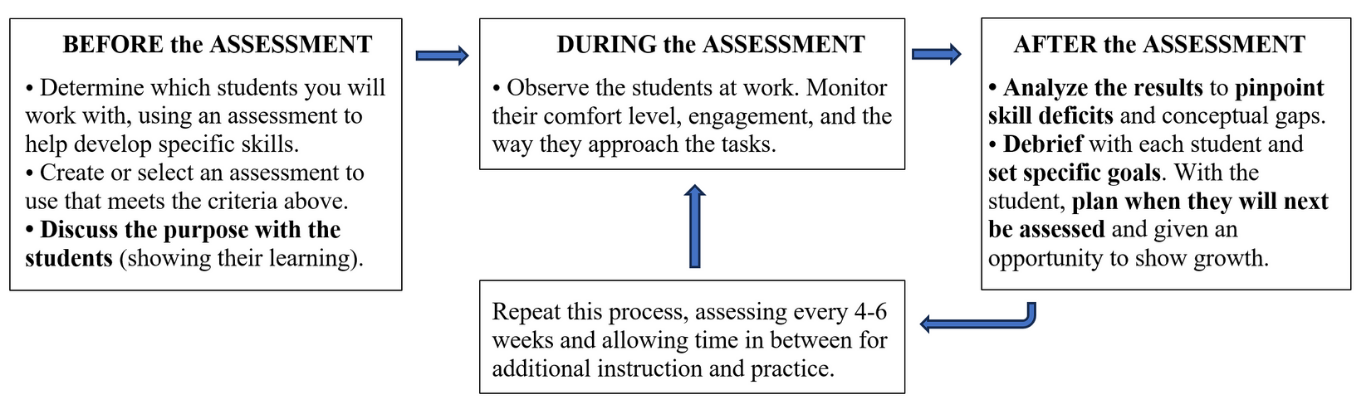
Even with effective consolidation placing new knowledge and skills into long term memory, students need many opportunities to retrieve the new knowledge and practice their new skills. Students struggling with performance gaps will not benefit enough from traditional practice methods (like assigning some practice problems for homework). The practice that will effectively help close achievement gaps is the practice that happens when intervention is done well.
This is another chance for a school (teachers and leaders) to work within their zone of power. It is true that some students never do homework. It is true that some students’ lives outside of school lack quiet spaces or supportive adults that make homework more doable. But at school, teachers and leaders can use coaching and intervention, planned well and carried out with intention, to ensure perfect practice is happening regardless of homework habits.
Educators Must Coach
Imagine a tennis coach observing an athlete practice. The coach analyzes her serve, her stance, and so on. The coach notices what the athlete does well and where she needs to improve, then teaches, demonstrates, and assigns specific exercises aimed at improving the athlete’s game. Elite athletes often get coaching like this in tennis or other sports. But struggling students need coaching in the subjects that challenge them most in order to make their practice beneficial.
4 Steps for Coaching Perfect Practice
- Closely monitor a student as they complete a task. Notice what they’re doing and how it compares with what should be done.
- Analyze their process and identify ways they can improve. Are they making mistakes or demonstrating misconceptions?
- Directly address the mistakes and misconceptions with the student. Show them correct procedures as needed.
- Observe as they complete additional tasks involving the same skill. Continue coaching until they consistently do the tasks correctly.
Additionally, schools need to make sure that the interventions they provide to struggling students are effective and aren’t just “going through the motions” of an intervention without really achieving the goals. Getting intervention right requires planning and intention on the part of the teachers providing it AND on the part of school leaders who must ensure the schedule is realistic, attendance issues are addressed, and more. But the good news is, everything on the checklist below is within the school’s zone of power.
Effective Intervention Checklist
__ It matches students’ identified needs and skill gaps.
Even when an intervention is “research based,” there must be evidence that it works for students who need what your students need. It happens too often that students get interventions that are not aligned with their needs! Skill gaps will have worsening impact over time as new concepts build linearly, so it’s essential that interventions address students’ actual gaps.
__ The educator who implements the intervention understands the key elements that make it work.
Having a script to follow “with fidelity” is not enough on its own. The adult needs to understand why it works and how.
__ Schedule (and protect) ample time for intervention in addition to (not instead of) core instruction.
This looks like 2-3 hours of supplemental instruction per week, in blocks of 20-60 minutes. Make sure to account for transition time. Do not allow intervention to replace core instruction. Struggling students need both.
__ Interventions are instruction, not just activities.
Interventions include direct instruction plus modeling and guided practice of a specific, targeted skill. Students should practice a skill several times up front and then return to it after a break. Both repetition and reinforcement are necessary.
__ Students are present and fully, actively engaged.
No student should be going through the motions of a task like it’s busy work or waiting around for others to finish. And, it should go without saying, but students need to be there to benefit. Get to the bottom of attendance issues or work around them if needed. A student who’s late frequently should not have intervention at 8:00 AM when they’ll seldom be present.