1. Collaboration
Teaching can be a very lonely profession.
Katie was an outstanding fourth-grade teacher, often recognized for her excellence. But her colleagues, who taught in neighboring classrooms, never saw her teach. They knew everyone thought Katie was great, but they never got the chance to learn from her.
Ruth had been teaching for 37 years. When she retired, there was no tradition or protocol for Ruth to share the wisdom or even the physical materials she had accumulated over her long career. The legacy of the effective classroom culture she’d built retired right along with her.
When veterans like Ruth and superstars like Katie teach (and eventually retire) in isolation, the teachers around them can’t learn from them. One teacher, Gail, put it like this:
“I never sat in anyone else’s classroom even once.
Mine is the only teaching style I know.
I felt that sometimes I was reinventing the wheel.”
Teaching in isolation isn’t good for any teachers or for students. So much potential for growth and learning is lost. But isolation is the most demoralizing for new teachers. Whether they’re new to the profession or to the school, new teachers need a community of colleagues. So often, schools fail to provide this one simple thing that can make a world of difference.
But teaching does not have to be a lonely profession.
 Get Teachers into Each Other’s Classrooms
One school district in Arizona pays several master teachers (in various grade levels and content areas) to get their own classrooms ready early so that they can show them to visiting cohorts of new teachers before the start of the year.
The master teachers explain procedures and routines they use, and new teachers are encouraged to photograph classroom organizational methods. The master teacher leads a simulated first day of school with the new teachers acting as the students. Together, they debrief the simulation, and they work together to develop classroom management plans.
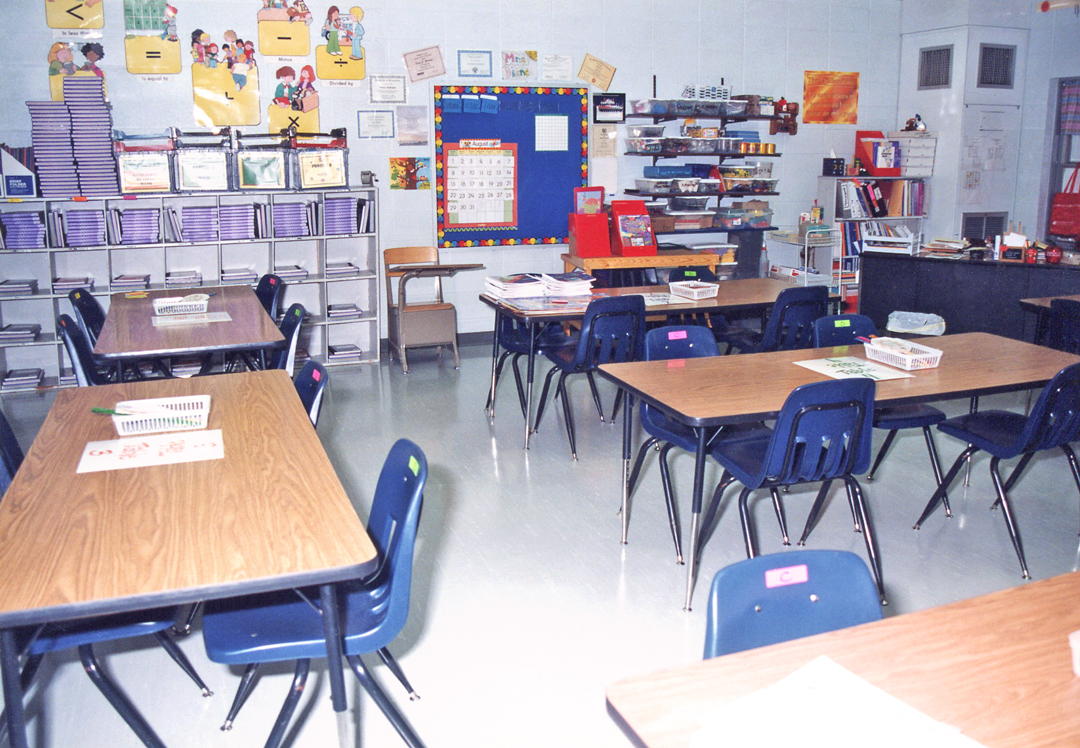
Let new teachers see expertly organized rooms.
Teachers, especially new ones, want to see what other teachers do in their classrooms. Give them the time, permission, and structure in which to learn from colleagues. Even without a formal visit to a demonstration classroom with a master teacher, a new teacher could benefit from opportunities to observe their more experienced colleagues at work (setting up their classrooms, teaching their students, and more).
 Let Teachers Plan, Reflect, and Evaluate Together
In both Japan and Finland (two countries known for high academic achievement) all the teachers in a school share a common office. Teachers work in groups to design lessons collaboratively. New teachers join more experienced teammates for regular group sessions that include ongoing cycles of planning, reflection, and evaluation. They share ideas and problem solve together.
Research shows that teachers’ collective efficacy has one of the greatest effect sizes on student achievement. That is, when teachers, as a group believe they can positively impact student achievement…then they can. Collaboration makes collective efficacy possible.
When teachers brainstorm, trouble-shoot, and create curriculum together, they help each other become more effective and empower one another to believe in their effectiveness. It helps teachers develop professionally and achieve results in their classrooms.
When it comes to teachers’ impact on students, collaboration…
- is more than three times as powerful as socio-economic status
- is twice as strong a predictor as past achievement
- has triple the effect of home environment and parental involvement
 Okay, but does collaboration really get teachers to stay?
Besides “a good principal” there are two job conditions that study after study has shown new teachers value even more highly than “more money.” They are…
- the chance to work collaboratively with effective teachers
- an orderly, focused, and consistent school atmosphere
Ironically (or maybe obviously?) the two factors that build a consistent school atmosphere are…
- instructional leadership
- staff members working collaboratively
In other words, teacher collaboration is key to creating a school where new teachers want to stay.

 Like many educators, I first encountered the work of Harry K. and Rosemary T. Wong in their classic, THE First Days of School. Since then, I’ve worked with them personally and come to know and trust them as the THE biggest advocates for new teachers. And, let’s be honest, new teachers could really use some advocates.
 In Shanghai, China, time is blocked off in a new teacher’s schedule for high-quality professional development with aims like…
 In Ontario, Canada, newly elected officials improved student achievement quickly by focusing on teacher capacity-building instead of innovation. In four years, Ontario high schools increased their graduation rate from 68% to 80%. Growth continued due to the new emphasis on teacher capacity. Now, Ontario schools rank in the top ten internationally in math, science, and reading.
 While building the capacity of new teachers is not the main focus of professional development across the United States, there are some U.S. districts that do it very successfully. Both Clark County, Nevada and the Flowing Wells district in Arizona have outstanding programs for the capacity-building of new teachers.

 In 2008, the rural district of Moberly, Missouri launched S.H.I.N.E. (Supporting, Helping, and Inspiring New Educators). Frustrated by the pattern in which schools seemed to be starting from scratch each year due to high teacher turnover, the then assistant superintendent Gena McCluskey tapped middle school teacher Tara Link to start the program.